
Democracy Crouching at Your Door
Tracking Political Demons

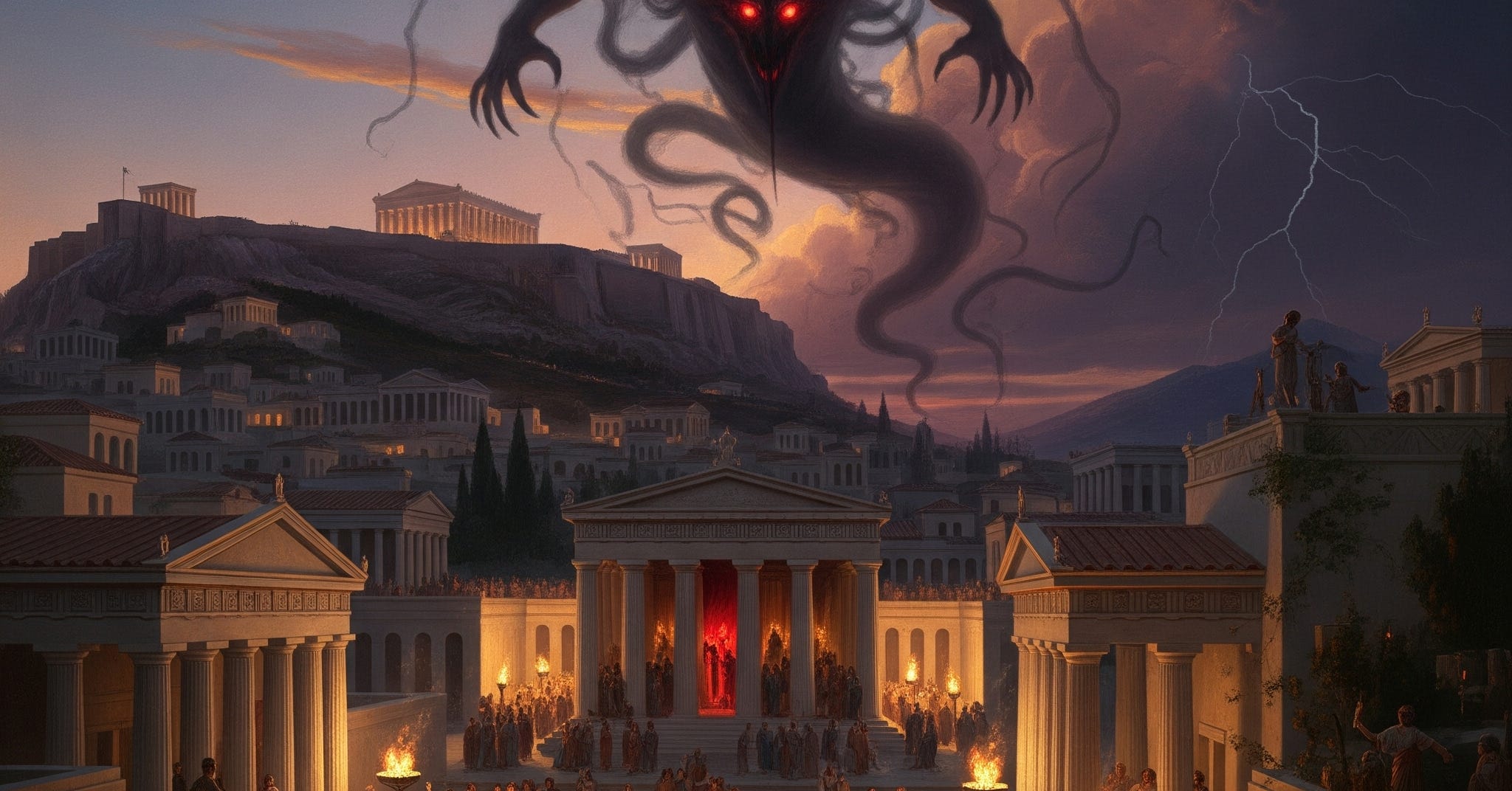
Western society ought to banish its love affair with the convoluted notion of democracy to rebuild in our minds a nuanced vision to avoid the dangers present in our current notion of this cultural spirit. Democracy designates a cultural spirit or a political daimon, a character more than merely a political structure. Such a description, so susceptible to being watered down as participating in poetic license, encourages a reinvention, or rather a recovery, of the analogous relationship between the political structure, i.e. the polis, and the human person or soul. Too often, the word “spirit” has been employed with only a flickering notion as to what it truly means. How frequently has it been said that there exists a democratic spirit? Spirits roam, and the times call for a serious reassessment of our ability to perceive and interact with spirits. The spirit of democracy presents us with a sufficient example of a cultural spirit.
I am encouraged in my task of banishing the love affair with democracy by the perceptive remarks in Loren J. Samons’ What’s Wrong with Democracy? From Athenian Practice to American Worship that Americans are largely ignorant of the history and development of the concept of democracy, while praising democracy as a good in itself and claiming an affinity between Athenian and American government.1 If democracy is conceived of as the equal and direct rule of all citizens, then America is no democracy. This may pose a rather unsettling reality for many Americans, but it is only the first step in discovering the work of spirits in the political realm. Therefore, I am showcasing the obsession with democracy in American culture as an initial movement into characterizing democracy as a political daimon. This essay intends to take corrupted classical democracy, specifically Athenian democracy, as a manifestation of the nature and work of a cultural spirit, a phenomenon arising out of the intersubjective arrangement of individuals according to, but not reducible to, a political constitution. Two crucial elements will be made clear: Platonic philosophy shows us that there exist spiritual agents between and among communities, and democracy is one such corrupted spirit, having persisted from Athenian democracy to American concepts of democracy.
What has possessed us to be so obsessed with democracy for the sake of democracy? As much as it is clear that democracy (in various forms, some unrecognizable to democracy’s origins) has been enacted by its proponents, it will also become clear that people have been acted upon. The disenchantment of our language regarding the activity and power of spiritual agents represents a substantial dissipation, a tremendous loss in our ability to account for the agentic patterns that motivate and move individuals and groups. The common discourse becomes stuck between the attribution of agency to atomized individuals or abstract algorithms, and thus it is unable to deal with infectious ideas, the seemingly unstoppable production of globally threatening AI systems, and other self-destructive patterns. Like patterns of addiction in individuals, the collective people ask themselves why they cannot stop certain destructive movements that are even known to be destructive. Premodern societies had enduring and complex systems for describing spiritual agency as an antidote to or defense against malign spirits. The recent work of Steven G. Smith entitled “Daimon Thinking and the Question of Spiritual Power” presents a modern perspective on spiritual power that coincides with my own project when Smith states:
Many other persons, however, have conceived spiritual power primarily as the power of spirits, invisible agents, to impinge on human lives with important effects. If asked to identify actual spirits, you or I might mention ‘spirit of’ items like an esprit de corps or nationalism or humanitarianism, but a premodern villager would probably speak of dead ancestors, imps, and gods. On the ‘spirit of’ model, one is oriented to engagement with a relatively abstract and broadly shared possibility of feeling, thinking, and acting; on the spirit-being model, one is oriented to being engaged by a concrete Other.2
Thus, I will begin by proffering a foundation for a phenomenological third term, the political daimon or daimonic principality, as might be found in the Platonic dialogues, particularly the Republic, careful as I can to leave the ontological status of this category for another inquiry. I will then proceed to track various ancient, modern, and contemporary authors as they contribute to a more robust account of the spiritual agency in general and the democratic daimon in particular.
The disenchantment of our language regarding the activity and power of spiritual agents represents a substantial dissipation, a tremendous loss in our ability to account for the agentic patterns that motivate and move individuals and groups.
Plato’s Republic dramatically constructs a method, apparently extemporaneously, for answering the endlessly seductive question as to the nature of justice by constructing a city in speech as a larger minted coin to determine the nature and working of justice in the individual soul. In so doing, a third term, the cultural spirit, emerges and unites the terms of the some-such constitution and the some-such soul. No explicit rendering of the term “cultural spirit” can be found in the Platonic dialogues. However, an analysis based on this third term offers both a useful conceptual middle term while also making a critical demand. The cascading decomposition of the city in the Republic offers insight into destructive patterns within individuals and communities.
More than a mere pattern or form, the use of “spirit” brings to the fore the idea of a self-motivated, self-replicating element to the patterns that capture, unify, disintegrate, or recapitulate among individuals or groups. I mean here a return to the perception of spirits in our world of experience. Said in that way, does such a proposal instigate distrust or dismissal, or more curiously, fear? The desire for attention to spirits is not a demand to return to superstition, but more so a demand to thicken and enrich our categories of those individual and social patterns that act upon us, that emerge from us while at the same time acting upon us. Furthermore, the recognition of spiritual agencies ought to prompt the re-creation of conceptual frames and, consequently, concrete responses to spirits in an age of spiritual ignorance. By utilizing the Republic’s critique of democracy in the decomposition of the city/soul and by returning to premodern notions of spiritual power, we can better understand the problems in the modern, Western notions of democracy and so avoid the dangers they contain by warding off its spirit through a deeper knowledge of its nature and work.
More than a mere pattern or form, the use of “spirit” brings to the fore the idea of a self-motivated, self-replicating element to the patterns that capture, unify, disintegrate, or recapitulate among individuals or groups.
First, the dialogues of Plato can provide ample evidence of the activity and agency of spiritual forces that can then be applied to the analysis of democracy as a daimonic principality or spiritual agency that emerges from and acts upon individuals and communities.
Divine Motivators in the Dialogues
References to daimons and agentic spiritual forces are plentiful in the dialogues of Plato. So memorable for its dramatic potency in the Apology, Socrates speaks of his personal daimon. The marker that clarifies for Socrates the righteousness of his deeds, that which guides him by warning him of false as a negative force moves he calls his “divine sign,” and Socrates says of it, “It is a voice, and whenever it speaks it turns me away from something I am about to do.”3 His daimon provides a negative guide in the case of the Apology from participating in public affairs or other such problematic encounters. While one might attribute such a phenomenon to personal conscience, Socrates relies upon on external spirit in his Apology. Far from attributing wisdom to himself on his own authority, Socrates calls for vindication from the world of spirits as he says, “I shall call upon the god of Delphi as witness to the existence and nature of my wisdom.”4 Socrates will renounce claims that he has possessed wisdom, yet he does not shy from claiming his service to the god.5 One does not possess wisdom as a conquering hero. Instead, one comes to be in the service of wise spirits, like the Delphic god, and thus one becomes wise by virtue of following the advice and influence of such spiritual agents.
Such spirits work in and through those who participate in their paradigmatic processes according to the Platonic dialogues. Notably mentioned in the Phaedrus, the Delphic demand is to “know thyself,” and encouragement to participate in the self-dialectical process of discerning whether one is “a beast more complicated and savage than Typhon, or…a tamer, simpler animal with a share in a divine and gentle nature.”6 Sharing in wisdom, to know oneself, cannot be a process undergone by the rational individual, alone and isolated, but rather something more intimately entangled in a complex and subtle world of spirits and daimons.
Sharing in wisdom, to know oneself, cannot be a process undergone by the rational individual, alone and isolated, but rather something more intimately entangled in a complex and subtle world of spirits and daimons.
Likewise in the Phaedrus, a dialogue concerned to a great degree with divine inspiration and the divine possession of humans, Socrates calls upon himself the inspiration and activity of the Muses: “Come to me. O you clear-voiced Muses… ‘come take up my burden’ in telling the tale.”7 The daimon makes itself known again to Socrates in Phaedrus when it prevents him from crossing the stream, the liminal space, before giving his speech, a call to atonement for speaking ill of love.8 The Phaedrus further indicates another spirit, eros, as a positively mediating spirit that drives the enactment of an anagogic ascent.
Eros drives the lover from rational self-possession to a transcending mania or loss of self-control. Love possesses the lover in such a way that this “madness from a god is finer than self-control of human origin” and “the right sort of madness finds relief from present hardships for a man it has possessed.”9 Not only is human ability demoted in its relation to the divinely originated powers, but in this case, human self-possession has no claim over the divinely inspired self-dispossession. In each case, one finds the description of daimons and spirits being called upon as agents capable of affecting human activity and as beings for whom there are real concerns. One does not find in the dialogues such descriptions that nullify the agency of an authentic other, but rather, there is a consistent indication of the invisible influence of discernibly different spiritual forces.
Now, most instances mentioning the daimon of Socrates reveal a certain particularity to these spirits, a functional differentiation. Daimons are said to be caretakers of dead souls on their way to Hades.10 They can be intermediary spirits between gods and mortals.11 The Republic tells us that each soul is granted a daimon as a guardian spirit.12 The Epinomis describes the daimons as intermediary spirits that have cares and concerns for humans, both for good and ill.13 These are all besides the descriptions of Socrates’ daimon, who steers the philosopher from doing evil or pursuing the wrong path. Yet, in many of these cases, the very individuated nature latent in the description of daimons would not suffice for the category I propose in the democratic daimon as such.
For the interest of clarity, I do not intend to identify my own use of the word daimon with these specific descriptions that entail a spirit associated with an individual soul only. The phenomenological category of daimon is used in this essay in two limited ways. Firstly, it is the spirit of a particular form, like the democratic present to and in the soul of an individual. Secondly, it is the same spirit that is present in and through a community of individuals. As an analogy, one might think of a computer code working on a particular desktop representing the presence of a daimon to an individual like Glaucon. The very same code configuration could also be working across multiple computers working in tandem, much like an algorithm. Having established this distinction, we can proceed to understand what the activity of this democratic spirit is as it appears in the Republic, and then show how this spirit is recognized, sometimes implicitly, by modern and contemporary thinkers.
What is Democracy?
Here, the crux of the issue becomes a clarification of the third term and its situatedness between the relata of the some-such constitution and the some-such soul. At this point, this essay has become a ghost-hunt, but I mean that in a very serious way. As in the process of becoming wise, I believe the political sphere is influenced by spiritual forces. Whereas in ages past, spiritual forces may have held prominence in the minds of pre-modern peoples through their religious rituals, fashioned idols, and cultic practices, imbuing all of their lives with spiritual presence, modernity slowly dissected and dissolved the visible signs of spiritual force. If one does not see Plato’s writings through the pre-modern, spiritualized lens, then one might entirely miss the philosopher’s powerful insights into spirits still at work today.
If one does not see Plato’s writings through the pre-modern, spiritualized lens, then one might entirely miss the philosopher’s powerful insights into spirits still at work today.
With that in mind, a close look at the Republic may provide some insight into the workings of malign spirits in the political realm. While the relation between the ideal city and the ideal soul has been the subject of much consideration in Platonic literature, this essay would turn the eye of the reader toward the relation between the degraded form of the city and the soul revealed in what the Republic terms democracy.
The Republic is often interpreted as critical of the Athenian democracy, and in that critique the character traits of the third-term cultural spirit of democracy become salient. But what precisely is being deemed as destructive by the critique offered by Socrates? In Plato’s Laws, the reader finds a much more nuanced approach to democracy that does not take on the mostly damning appraisal offered in the Republic. The Laws treats more practically the problem of regimes and administrations as opposed to constitutional characters.14 As Michels notes, “Democracy is that regime—or non-regime, rather—where the many rule with an eye to self-interest,” where the issue at stake is not so much the formation of the political system but it is instead orientations of the interests of such formations. Michels goes on to say, “These administrations govern self-interestedly, at the expense of the common good. Regimes rule for the city; factional administrations rule others for themselves.”15 The Republic and the Laws then appear at odds with each other insofar as the Republic claims that all four of the described constitutions are all “diseased cities” culminating in the most debased form of tyranny.16
The Laws, however, implies the potential goodness of democracy even when it may fall into corruption like a poorly orchestrated sumposium. In a poorly structured sumposium, “Everyone becomes lighter than he really is, rejoices, becomes filled with license of speech, and fails to listen to his neighbors; each considers himself capable of ruling the others are well as himself.”17 But drunkenness, like a constitution of a particular functional formation, remains potentially beneficial to the sumposium as Michels notes: “There is such a thing as good drunkenness: it exists where individuals indulge themselves within the confines of the law, and for the sake of moderation.”18 Democracy as a system of government does not have an essentially corruptive form as the Laws demonstrates, but it does coincide in the Republic’s unique framing with a diseased spirit present in both the individual and the community that enables us to propose the democratic daimon. Democracy in the Republic is like a bad party, chaotic and heading toward disaster. Bad spirits are involved.
Democratic Soul, Democratic Constitution, Democratic Spirit
The political constitution of the democracy is compared to the democratic soul so that there is a pattern of coincidence, namely the cultural spirit, which must be presupposed if it is true that the soul may be democratic while the constitution to which it adheres is not, and vice versa. Likewise, there are casual relations between the democratic soul and the democratic constitution. This in turn proves fruitful for applying the insights found in the Republic to modern discourse surrounding democracy. For if it is the case that an ancient political arrangement, in all its specific laws and customs, does not exhaust what I have called the cultural spirit of democracy recognized by Plato, then it might be possible to level a critique of the modern democratic spirit without falling into the mire of anachronism.
In book VII of the Republic, Socrates revels in the satisfaction of completing the city in speech after the introduction of the three waves of paradox, and by these additions the city has reached the pinnacle of good government.19 But the conversation returns to a digression about the constitutions, with their coinciding types of souls, that represent the four stages of decomposition: the Laconian, the oligarchic, the democratic, and the tyrannic.
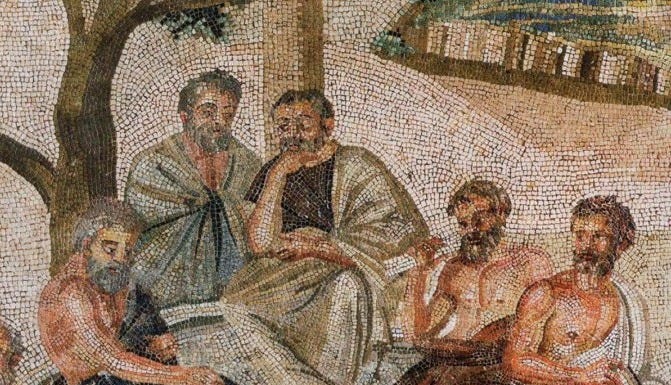
The Muses, another level of spiritual entities so often referenced in the Platonic corpus, take their residence in Socrates and he speaks in their name of the cascading decomposition of the city. Speaking as if it were a speech not his own, Socrates says, “‘Not even a constitution such as this will last forever. It, too, must face dissolution.”20 Human limitation faces the same entropy to which all nature is subject. When the moderation of the oligarchic constitution could not hold, reason and spiritedness being made slaves of the appetitive element,21 the desire to acquire as much wealth as possible allows for the breeding of immoderate desires and expenditure of capital by the youth.22 Spending and the wasting away of the wealth produce a generation incapable of moderation. The system itself, bent upon the money-loving nature of the constitution leading to democracy, inhibits the practice of virtue by its internally generated exchanges of loans and consumption. This consumptive apparatus stretches the distinction between rich and poor, the rich becoming opulent and weak while the poor realize their own advantage over the rich saying to themselves, “‘These people are at our mercy; they’re good for nothing.”23 Thus, civil war ensues, leaving the poor victorious and a new reign of total equality.
In such a city/soul, the desires depart from that unifying desire for the Good once established by the just arrangement of the ordered soul. As the city/soul had decomposed, the goods which it was oriented toward fragmented and fractured from once desiring the Good, then to desiring the appearance of the Good through honor, then to good things acquired by wealth, and finally to the radical equality of all goods. The democratic spirit raves and roams after the sheer variety of goods. Such a city or soul glories in its multiplicity. Such a diversity, not realized to be the infirmity that it is, appears as appears as the “divine and pleasant life.”24 Full license abounds in this city as it does in the coinciding soul, “and it would seem to be a pleasant constitution, which lacks rulers but not variety.”25 The rejection of the Good as the ultimate desire has produced an idolatry of multiplicity. The democratic spirit craves anything and everything, and the individual soul in which this spirit has made its residence “lives on, yielding day to day to the desire at hand. [...] leaping up from his seat and saying and doing whatever comes into his mind.”26 An image like this transcends the time and place of Socrates as we can readily see it recur at times in our own lives, in the lives of those we know, and in whole societies.
The pattern of the democratic daimon has been shown to be intelligibly recognizable, and its production and promulgation lies both in the activity of cities as a whole and in individuals. It is discernible in both, yet reducible to neither. But in the Platonic dialogues, it would appear that forms are of realities in the realm of being, not non-being. How could there be a discernible pattern of decomposition? As a form, such an understanding of the democratic pattern could not hold since it would appear to be a pattern of dissolution. But if we understand the democratic pattern as an agentic force, a daimon that acts upon individuals and communities alike, then what emerges in the parasitic spirit of democracy that is recognizable across history in its various, particular permutations.
To understand the democratic daimon, here must be an account of its fracturing activity, I call the diabolical tendency. Here, I use the term diabolic as a play on its etymological roots (diaballein) as a “casting apart” or fracturing. As the Republic shows us, it is in the very nature of the democratic constitution to devolve into a state wherein the good that it desires is absolute freedom, or we might say that in such a constitution, all goods are equal.
As the Republic shows us, it is in the very nature of the democratic constitution to devolve into a state wherein the good that it desires is absolute freedom, or we might say that in such a constitution, all goods are equal.
In the total equality of goods, there is a fundamental loss of the transcendent Good that could ground the moral rectitude of a people or the just structure of its form of life. Freedom as the absolute good understands itself to be the ability of each individual to be a “reed shaken by the wind” of the multitude and whimsical passions which might blow the soul, or the constitution itself, here and there. In the Kallipolis, there is a desire for the Absolute Good, and insofar as all desire the good, the city is made into a unity. When we love the good, the good loves us back by way of our participation, just as “the philosopher, by consorting with what is ordered and divine and despite all slanders around that say otherwise, himself becomes as divine and ordered as any human being can.”27 From the city’s ordered structure, the laws bind all together in a dynamic unity. Socrates says to Glaucon in book VII regarding the purpose of the laws:
You are forgetting again that it isn’t the law’s concern to make anyone class in the city outstandingly happy but to contrive to spread happiness throughout the city by bringing the citizens into harmony with each other….The law produces such people in the city, not in order to allow them to turn in whatever direction they want, but to make use of them to bind the city together.28
If we love any good or all relative goods equally, those goods hate us. “The privatization of pleasures and pains dissolve the city.”29 They cast asunder what the Good has joined together through the harmony established by the constitution in its laws. This is what I would call the diabolic tendency that sets importance on the pure expression of varying passions among individuals thus causing disharmony in the city and the dissolution of the unifying spirit that justice had enabled “that the city might be one and not many.” Notably, the democracy that Socrates describes is not a pure democracy as it might be imagined, but it is instead an oligarchy hidden under a democratic façade. The oligarchic rulers produce a commercial society where the products are reactive to the varying desires of the drones in our tempestuous beehive.30
Modern and Contemporary Voices on the Democratic Spirits
A democratic voting system may be based on a simple misunderstanding of human nature. Everyone can vote, not only because everyone has the right to vote, but also because it is assumed that voters are mostly reasonable, or so thought the political philosopher Rousseau. For Rousseau, reason among the people becomes a solid front; it unites. Whereas the errant passions of individuals, the ones Socrates criticizes as democratic souls, splinter apart. Socrates was not so foolish as Rousseau in assuming that because reason tends toward unity in justice and the passions tend to be neutralized because of their clashing variety, a democratic constitution would tend to yield just conclusions in form and action. People are inclined to imitate the desires of others as they are expressed in cultural narratives, political movements, or the opinions of friends. This motivates the replication of certain patterns of behavior that act on the people as much as the people produce them. The cultural spirit of democracy breeds itself within the populace as it does analogously in the soul of the individual. In this way, we might come to find it useful in expressing a devolved cultural spirit as a living and agentic entity in much the same way as we understand a plague or a sickness.
I appropriate Simone Weil’s description of collective passions that she utilizes in her critique of Rousseau’s “general will.” In Weil’s argument, Rousseau’s reasoning fails when it does not account for the manifestation of collective passion that in some manner unifies them in small diseased pockets ignorant of justice and truth. For Weil, Rousseau does not fail to acknowledge the supremacy of transcendent values like the form of justice or goodness. Weil’s critique is leveled at democracy’s inability to promote a state of equilibrium wherein the forms of justice and goodness might find a place to manifest among the people.
Weil states that, “The true spirit of 1789 consists in thinking, not that a thing is just because such is the people’s will,” which would be a strikingly similar spirit to the one described as democratic in the Republic, “but that, in certain conditions, the will of the people is more likely than any other will to conform to justice.”31 This is a worthy addition to the Socratic argument that a democratic daimon is a source for the corrupted and corrupting multiplication of desires. It is under the auspices of the democratic spirit, a spirit in which the equality of all desires is set at the pinnacle of its value hierarchy, that collective passions can form as cysts in a society. This is not to say that the democratic spirit is a unique or only source of corruption, but rather as a motive, generalized stage for the propagation of collective passions. And, if the form of the cascading decomposition of the city/soul is to be taken seriously, it affords and engenders the manifestation of totalitarianism or tyranny. Weil, arguing against Rousseau’s confidence in the general will, says of the society that breeds collective passions:
If it becomes prey to two, or four, or five, or ten collective passions, it is divided among several criminal gangs. Divergent passions do not neutralise one another, as would be the case with a cluster of individual passions. There are too few of them, and each is too strong for any neutralisation to take place. Competition exasperates them; they clash with infernal noise, and amid such din the fragile voices of justice and truth are drowned.32
Plato’s demand for censorship in the ideal city (coupled with the reintroduction of poiesis after proper education regarding the distinction of reality and appearance) becomes even more relevant in the case of collective passions. The emergence of collective passions is the product of the power of imitation and the mimetic nature of souls. Passions not only group together naturally, as like seeks out like and misery loves company, but they also collect and draw together individuals. One might take the example of social media in our current participation in the democratic spirit. Modern entertainment produces content as a response to the beckoning of those specialized consumer groups or collective passions. Content and consumers mutually constitute each other. Content creators are shaped by the responses they receive from consumers, and this is evidently so by virtue of all typical theories of economic production and consumption. On the other side of the equation, consumers can be swayed and shaped by the mixture, variation, and milieu of content that is allowed into the specialized faction/consumer group. Censorship becomes necessary in order not to inseminate an individual or engender a communal response.
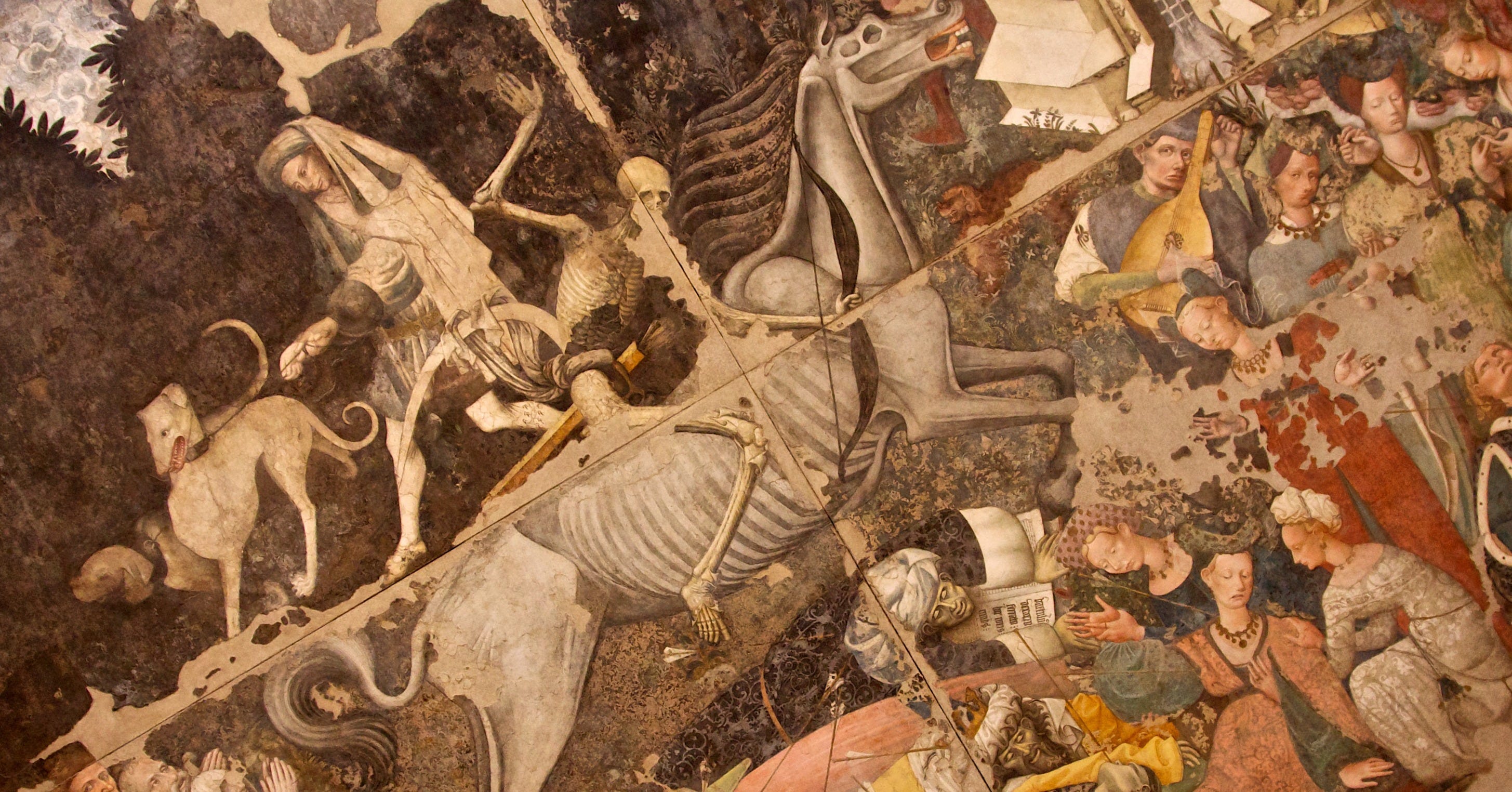
The emergence of collective passions is the product of the power of imitation and the mimetic nature of souls. Passions not only group together naturally, as like seeks out like and misery loves company, but they also collect and draw together individuals.
The democratic daimon becomes recognizable in contemporary culture in various analyses of the problems of consumption and decay. The Republic describes the decomposition of the oligarchic constitution into the democratic one via economic systems driven by desires for accumulation of wealth. It could not be overlooked that such an accumulative and consumptive propensity is almost inextricably linked to the capitalism of Western nations, especially America. In Byung-Chul Han’s Capitalism and the Death Drive, production in the capitalist society simulates life as humans in this system pretend toward reason, while they are in fact ruled by their Freudian drives.33 Nothing satiates the capitalistic tendency just as nothing satiates the democratic swerving from one desire to another. Han says of this growth:
What we nowadays call ‘growth’ is in reality random, cancerous proliferation. We are currently living through a frenzy of production and growth that seems like a frenzy of death. It is a simulation of vitality that conceals a deadly impending catastrophe. Production increasingly resembles destruction. Humankind’s self-alienation may have reached a point ‘where it can experience its own annihilation as a supreme aesthetic pleasure’.34
Once again, society is faced with a drive best described as a self-replicating pattern with a diabolic tendency. At first, cancerous growth appears at odds with diabolic fracturing. Yet, if we examine what the capitalist reaction to death entails, we can see how its fight against death itself is a motion toward death. Death ought to be understood for what it is: dissolution of that which makes an organic unity a unity. More capital means less death: capital is the excess of the of supplementations in the face of death, a use of death against death. But the accumulation of death in the various forms of capital threatens to overwhelm the original essence of life whose continuation becomes beleaguered by the burdens of excess supplement.35 When a human body is infested with foreign bodies, death is the result of the overwhelming of the body with an excess of foreign bodies. Han’s description of growth in such a society as cancerous is congruous with both the account given in the decomposition of the city/soul in Plato and the proposal of the democratic daimon in this essay. Capitalism, according to Han, channels the frenzied drive toward death in the constant reproduction of the same in such a way that it mirrors the diversity of desires in the democratic spirit. In both, no hierarchy of goods can be admitted because cancer grows for growth’s sake. Death is forever at the doors of the human condition. Wealth and violence provide the only readily available revolt against death’s onslaught.
A more concretized form of the death drive described by Han presents itself in the form of the democratic daimon. For the death drive, the accumulation of capital, or the satisfaction of desires, can take on various forms. In democracy, it takes the form of the spirit that relativizes goods and promotes the algorithmic decomposition of the unity of the soul or the city through the accumulation and deregulation of the guiding principles of reason.
Conclusion
Democracy has become so ingrained in the modern American mind as good in itself without regard to any higher obligation. Plato warns of the kind of degeneration that occurs in our souls and communities when reason, with its love of the Good, is displaced by the democratic spirit. Humans are not free from entropy. We are not free from the cycles of dissolution of our efforts, just as we are not free from the cycles of death and birth. Yet, it is to our constant detriment that we fall prey to daimonic spirits under the assumption that parasitic, diabolical patterns are best understood as abstract categories with no agency of their own, or otherwise as the atomized issues of individuals to be solved on the individual level. The democratic spirit is vicious, and understanding it as an agentic daimon that is not reducible to its instances provides us with a more robust account of the work and nature of destructive patterns.
Yet, it is to our constant detriment that we fall prey to daimonic spirits under the assumption that parasitic, diabolical patterns are best understood as abstract categories with no agency of their own, or otherwise as the atomized issues of individuals to be solved on the individual level.
Samons, Loren J. What’s Wrong with Democracy? From Athenian Practice to American Worship. Berkeley, CA: University of California Press, 2004, 2.
Smith, Steven G. “Daimon Thinking and the Question of Spiritual Power.” Heythrop Journal 55.2 (2014): 173–187. Web.
Plato. Plato: Complete Works. Edited by John M. Cooper, Hackett, 2009.
Plato. Apology, 20e.
Apology, 21d.
Phaedrus, 229e-230a
Phaedrus, 237a-b.
Phaedrus, 242c.
Phaedrus, 244b-e.
Phaedo, 107d-108c.
Symposium, 202d-203a.
Republic, 620d.
Epinomis, 984b-985c.
Michels, Steven. “Democracy in Plato’s Laws.” Journal of Social Philosophy 35, no. 4 (2004): 517–528
“Democracy in Plato’s Laws,” 519.
Republic, 544c.
Laws, 671b.
“Democracy in Plato’s Laws,” 520.
Republic, 543c.
Republic, 546a.
Republic, 553d.
Republic, 555c.
Republic, 556e
Republic, 557e
Republic, 558c.
Republic, 561d
Republic, 500d.
Republic, 519e-520a.
462a-b.
560a-561a.
Weil, Simone. On the Abolition of All Political Parties. Translated by Simon Leys. New York: New York Review Books, 2014, 8.
Weil, Simone. On the Abolition of All Political Parties. 8.
Han, Byung-Chul. Capitalism and the Death Drive. Translated by Daniel Steuer. Cambridge, United Kingdom: Polity Press, 2021, 3.
Capitalism and the Death Drive, 1.
Capitalism and the Death Drive, 7.